
The Lawfare Files Part 4: The Racketeering That Never Was
A recap analysis of the failed Georgia RICO prosecution.

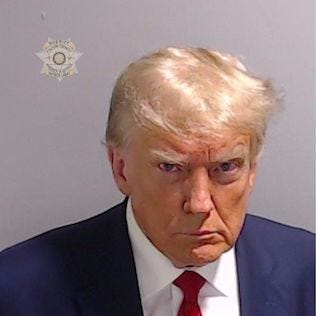
I predict this photo will be remembered as one of the most iconic photos in American history—perhaps even globally. A former President of the United States, and at the time the leading candidate in the upcoming presidential election, sitting for a mugshot for more trumped-up charges—no pun intended. Donald Trump’s mugshot was taken on August 24, 2023, at the Fulton County Jail in Atlanta, Georgia, following his indictment under the state’s Racketeer Influenced and Corrupt Organizations (RICO) statute. This was his fourth indictment during his re-election campaign and the second involving state charges, following his New York prosecution.
The Georgia prosecution stands out among the criminal cases against Trump for several reasons. It is the only one that invokes the RICO statute, a law typically reserved for organized crime. The indictment frames Trump and 18 co-defendants as part of a “criminal enterprise” allegedly involved in a coordinated effort to overturn the 2020 election results in Georgia. High-profile figures such as Rudy Giuliani, Mark Meadows, and Sidney Powell were included, accused of acting in concert. The alleged conspiracy largely centers on purported efforts to “subvert” Georgia’s election outcome, particularly the now-infamous phone call to Georgia Secretary of State Brad Raffensperger, during which Trump asked him to “find 11,780 votes.”
The case is also notable for its complexity. Unlike the other prosecutions—which involve business records, classified documents, and January 6—the Georgia case uses RICO to bundle a wide range of alleged acts into a single, overarching narrative: that Trump, as the incumbent president, sought to undermine Joe Biden’s electoral victory in Georgia—and, by extension, the entire 2020 election.
As I’ve discussed in previous entries of my Lawfare Files series, the civil and criminal cases against Trump have shown apparent flaws, which upon closer inspection reveal cracks beneath the surface. The Georgia RICO case is no exception. Once I finish laying out the weaknesses in this prosecution, you may end up agreeing with me.
The Smoking Guns…With Zero Ammo
The Call That Sparked it All
On December 23, 2020, President Trump held a phone call with a chief election investigator in Georgia. During the call, Trump urged an investigation into alleged election fraud. The Washington Post released the call in an exclusive report, claiming Trump said, “Find the fraud,” and promised the investigator would be a “national hero” if they did. This came just days after another Post exclusive that published Trump’s January 3, 2021 call with Secretary of State Brad Raffensperger, portraying him as pressuring state officials ahead of the Senate run-off and the Electoral College certification.
While these calls were not central to the RICO charges, they helped underscore the broader narrative that Trump pressured officials to undermine Biden’s win.
Here’s the problem: That claim was false.
Months later, on March 11, 2021, the Post issued the following correction:
Two months after publication of this story, the Georgia secretary of state released an audio recording of President Donald Trump’s December phone call with the state’s top elections investigator. The recording revealed that The Post misquoted Trump’s comments on the call, based on information provided by a source. Trump did not tell the investigator to “find the fraud” or say she would be “a national hero” if she did so. Instead, Trump urged the investigator to scrutinize ballots in Fulton County, Ga., asserting she would find “dishonesty” there. He also told her that she had “the most important job in the country right now.” A story about the recording can be found here. The headline and text of this story have been corrected to remove quotes misattributed to Trump.
Although these calls were not the foundation of the indictment, they supported six of the 41 charges filed by District Attorney Fani Willis. Those charges—Counts 2, 5, 6, 23, 28, and 38—centered on “Solicitation of Violation of Oath by a Public Officer.” Under Georgia law:
Any public officer who willfully and intentionally violates the terms of his oath as prescribed by law shall, upon conviction thereof, be punished by imprisonment for not less than one nor more than five years.
However, on March 31, 2024, Judge Scott McAfee dismissed those six charges, stating:
They do not give the Defendants enough information to prepare their defenses intelligently, as the Defendants could have violated the Constitutions and thus the statute in dozens, if not hundreds, of distinct ways.
In short, the charges lacked specificity. Willis' team failed to identify exactly which constitutional provisions were supposedly violated.
Dismissal of “Fake Electors” Scheme
Two additional charges related to an alleged scheme to submit a false slate of electors were also dismissed. Count 10 charged Trump and others with “Conspiracy to Commit Filing False Documents,” and Count 11 with “Filing False Documents,” based on their submission of an alternative Certificate of Ascertainment claiming Trump won Georgia.
On September 12, 2024, Judge McAfee dismissed both charges, ruling they involved documents filed with federal entities—the U.S. District Court and the National Archives & Records Administration. Under the Constitution’s Supremacy Clause (Article VI), federal law supersedes conflicting state law. McAfee ruled that Georgia had no jurisdiction to prosecute alleged crimes governed by federal election statutes like the Electoral Count Act.
With the phone call claims and alternate elector charges dismissed, what remained of the case? What was Willis actually left with?
Willis’s History of Conflicts of Interest
Accusation of Political Prosecution
On August 24, 2023, Congressman Jim Jordan (R-OH), who is also chairman of the House Judiciary Committee, sent a letter to Fulton County’s District Attorney Office for Fani Willis, requesting documents and information related to her prosecution of former President Donald Trump and 18 others on charges of election interference in Georgia. The letter was part of an investigation by the Committee into what Jordan described as potential "politically motivated" actions by Willis’s office. Key points from the letter include:
Demand for Documents: Jordan requested all records related to Willis’s investigation, including communications with the U.S. Department of Justice, particularly special counsel Jack Smith, who was also investigating Trump’s efforts to overturn the 2020 election. He sought details on the use of federal funds by Willis’s office for the investigation.
Concerns About Motivation: The letter questioned the timing of Willis’s indictment, noting it came two-and-a-half years after her investigation began, coinciding with the 2024 presidential campaign season. Jordan suggested the prosecution might be designed to interfere with Trump’s campaign, as the trial was proposed to start on March 4, 2024, near Super Tuesday and the Georgia presidential primary.
Federal Interests: Jordan argued that the prosecution implicated “substantial federal interests,” raising concerns about whether Willis’s office was improperly using state law to target federal officials or infringing on their free speech rights. He also inquired about coordination with federal authorities.
Specific Allegations: The letter highlighted Willis’s creation of a new campaign fundraising website shortly before the indictment and her requirement for mugshots of defendants, including Trump, which Jordan noted was not standard in Trump’s other indictments.
The letter was sent hours before Trump surrendered at the Fulton County Jail on August 24, 2023, and was part of a broader effort by House Republicans to scrutinize prosecutors investigating Trump. Willis responded on September 7, 2023, in a nine-page letter, accusing Jordan of attempting to obstruct her case and violating constitutional principles of state sovereignty and separation of powers. She argued that his requests were unconstitutional and lacked a legitimate legislative purpose, and she provided limited information about federal grants while refusing to share nonpublic details of her ongoing investigation.
In my view, this was a bizarre response. If Willis had nothing to hide, why reject oversight from a federal committee leader exercising his constitutional authority?
Willis’s Affair With Nathan Wade
On January 8, 2024, Michael Roman, another co-defendant in the prosecution, released a bombshell court filing accusing Fani Willis of engaging in a relationship with Nathan Wade, the Special Prosecutor for the RICO case. The motion, filed by attorney Ashleigh Merchant, claims Willis financially benefited from hiring Wade, as he allegedly used his earnings (over $650,000) to fund lavish vacations for them, including trips to the Caribbean, Miami, and Napa Valley. Interestingly, in a situation when a District Attorney appoints a Special Prosecutor, the approval process goes much quicker than requesting an Independent Counsel by a Commission Board of some sort. To raise even further suspicion of the situation, attorney Merchant revealed in her filing that Nathan Wade had zero experience in litigating RICO cases. Both the State of Georgia and City of Atlanta have public attorneys with lots of experience in both prosecuting and defending RICO cases. This raises the question: If Fani Willis truly wanted to convict Trump on RICO, why not hire one of the state or city’s best attorneys, with experience in that statute?
The compensation situation with Nathan Wade got worse when Willis doubled down on her lies. Speaking to a church crowd on January 14, 2024, Willis broke her silence about the affair allegations. She went on to claim that the claims are racially motivated attacks against her and Wade on account of them being Black (an absurd claim on its own, but I digress). However, the major issue that came up in her speech was that she claimed attorney Wade received the same payment as her other lawyers—a claim we have that is factually proven false. Thanks to exclusive documents obtained by the Daily Caller News Foundation (DCNF), we have official receipts that verify Fani Willis did not pay Nathan Wade the same as her other lawyers. Among the findings in the report revealed:
“As recently as May 2023, her office paid the attorney considered Georgia’s top racketeering expert, John Floyd, only $200 per hour, while Wade — who reportedly has little to no experience prosecuting RICO cases — was earning $250 an hour, according to billing statements obtained by the DCNF…In total, Wade’s firm has received nearly $654,000 from the Fulton County District Attorney’s office since the start of 2022, according to county records. Over the same period, Floyd’s firm received just over $90,000, per county data.”
As a result of these findings, Judiciary Committee Chairman Jim Jordan launched a probe into Nathan Wade, as well as sending a letter to Wade requesting various documents and communications in relation to his involvement with the RICO case.
These discoveries led to a couple big turning points in the case in the month of February 2024, including Fani Willis publicly acknowledging her ‘personal relationship’, as well as Judge McAfee leading an evidentiary hearing to address the possible disqualification of Willis or Wade, or both. On March 15, 2024, Judge McAfee declared, in a 23-page ruling, that no actual conflict of interest was proven, but that the “appearance of impropriety” exists due to the relationship. He further ordered that either Willis or Wade must resign. Wade ultimately resigned hours later, allowing Willis to remain on the case.
Three days after the ruling on March 18th, President Trump, and 7 other co-defendants in the RICO case, filed for Judge McAfee to issue a certificate of immediate review of his order denying disqualification of Fani Willis. Two days later, on March 20th, Judge McAfee granted Trump and the co-defendants permission to appeal his ruling, which could lead to Willis being disqualified.
The Beginning of the End for Fani Willis
Upon the discovery of the affair and the Judge granting Trump permission to file for appeal, the RICO case became entirely overshadowed in the public eye and the courts thanks to Willis’ own self destruction. Beginning on March 29, 2024, President Trump and eight other co-defendants in the Fulton County RICO case filed an appeal of the Fani Willis disqualification ruling to the Georgia Court of Appeals (GCOA). A little over two months later, on June 3, 2024, the GCOA officially docketed the Fani Willis disqualification case and set oral arguments for October 4th. Then on June 5, 2024, the GCOA released a Court Order POSTPONING all further proceedings in the Fani Willis RICO case against Trump until they reach a decision on disqualification. This Order prevented any hopes from Willis or the Democrats of Trump facing another pre-election court trial.
Willis did make one last attempt at preventing her disqualification. One week after the Court Order, on June 12, 2024, Fani Willis filed a motion to the GCOA requesting that they dismiss the appeal of the disqualification motion brought forth in the Trump RICO case. Her motion quickly became irrelevant when just over a month later, on July 16, 2024, the GCOA decided to move oral arguments for Willis’ disqualification hearing LATER than already expected. As a result of a scheduling conflict, the Georgia Court of Appeals' new set date for her disqualification hearing was made for December 5th—one month after the Presidential Election. This once again ended any chance of Fani Willis bringing her RICO case against Trump to trial before the election.
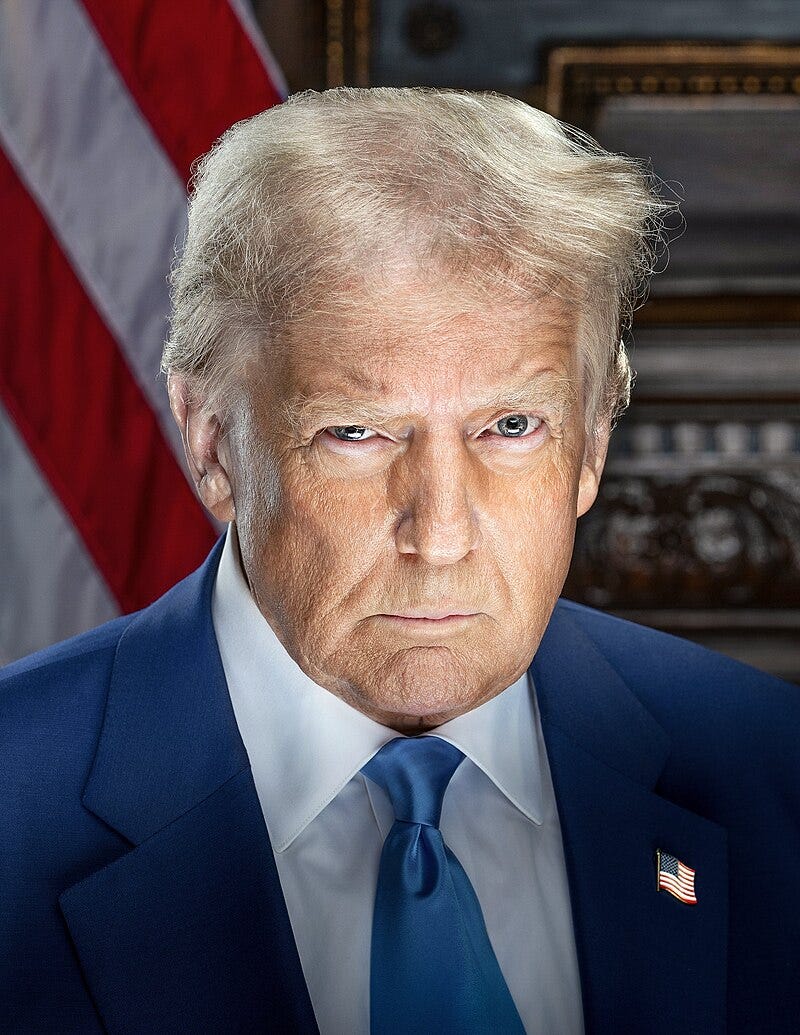
Spoiler Alert: Trump won
Following Trump’s re-election victory, the GCOA released a Court Order abruptly canceling oral arguments in the Fani Willis’ disqualification hearing, thus putting the RICO case against Trump on hold indefinitely. The final nail in the coffin came on December 19, 2024 when the Georgia Court of Appeals finally disqualified Willis from prosecuting the case. While the Court did not dismiss the RICO case itself, there would still be positive updates for President Trump. These updates include how the State of Georgia will need to find another prosecutor for the case, which will most likely not resume until after Trump leaves office on January 20, 2029. The GCOA also wrote, in a unanimous 3-0 opinion, rejecting Fani Willis’ motion to reinstate Trump’s already dismissed charges by Judge McAfee. Those charges, gone permanently from the case, were some of the most critical to her case. After Trump's lawyers filed a motion arguing that the lack of detail with some of the charges warranted dismissal, the trial judge agreed, and so did the Court of Appeals, who also found that “the indictment fails to include enough detail to sufficiently apprise the defendants of what they must be prepared to meet so that they can intelligently prepare their defenses.”
To summarize, without those charges back, the prosecution has a case at all against Trump in the RICO charges.
Final Thoughts on the Case
While the RICO statute allowed Willis to construct a more dramatic narrative against Trump, that strategy backfired. Her case centered on two pillars: the phone calls and the alternate electors. Both pillars have collapsed. Trump’s RICO indictment seems part of a broader trend where prosecutors stack expansive charges to inflate the perception of wrongdoing. And, even if Trump were guilty of racketeering (which I do not believe), Willis should have chosen a qualified RICO attorney—not a romantic partner with no relevant experience.
Given the resources and authority at their disposal, the Fulton County DA’s office may have picked the worst possible team and legal strategy to prosecute Trump. The result was an effort that failed to block his campaign and instead exposed serious flaws in the case. This series has consistently highlighted the weaknesses in each prosecution Trump has faced. Despite the efforts of Alvin Bragg, Letitia James, and Fani Willis, their cases have suffered from factual inconsistencies and potential civil liberties violations. Yet none compare to the magnitude of Trump’s final two federal prosecutions—led by none other than Jack Smith.
All will be revealed next Friday, in The Lawfare Files.
Now that all of articles are published, feel free to go back and read the whole series!!
Prologue: Coming Soon: The Lawfare Files
Part One: Breaking Down the Hush Money Trial
Part Two: Dismantling the Gaslighting from the Civil Fraud Case
Part Three: Unraveling the E. Jean Carroll Trial
Part Four: The Racketeering That Never Was: A recap analysis of the failed Georgia RICO prosecution
Part Five: A Stretch of Obstruction: A Breakdown of Jack Smith’s Federal Election Prosecution
Part Six / Finale: The Truth About Trump’s Classified Document Case
Epilogue: The Lawfare Files: Read The Series